Identity and the Social Construction of Reputation in World Politics Jonathan Renshon & Ryan Powers
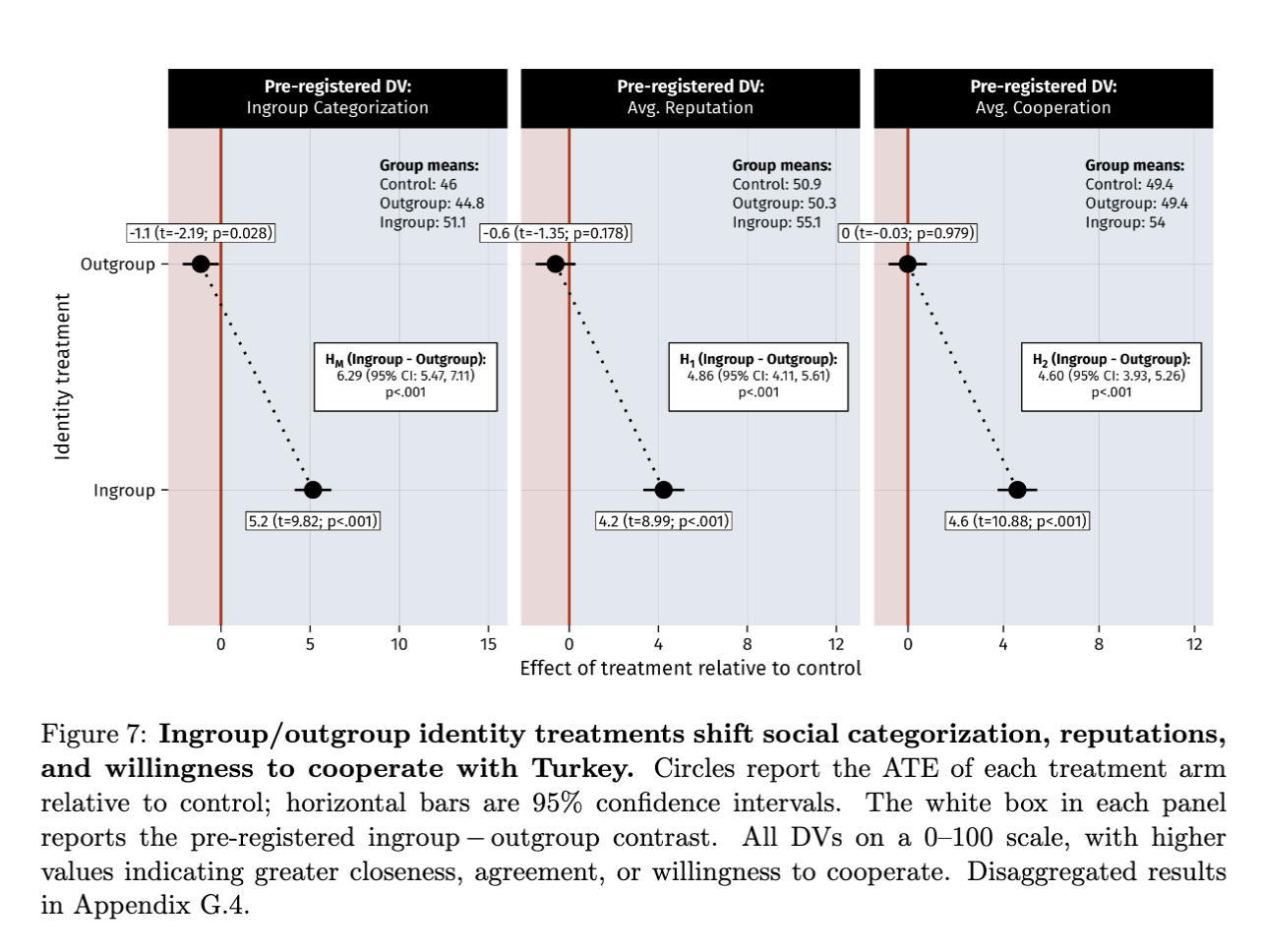
Scholarship on reputations in IR has left out a striking feature of human psychology: identity. Categorizing others as “us" or “them" is automatic, pervasive and has significant implications for reputations. We provide a framework---based on social identity theory---to explain how ingroup bias affects how reputations are generated and maintained. We field descriptive surveys on public and elite samples to learn about the markers of international ingroups and to aid in our experimental design. We use those surveys to design pre-registered experiments that test implications of our identity-based theory of reputations, finding that ingroup membership improves (1) reputations of all types (signaling, financial, humanitarian and resolve) and (2) observers' willingness to cooperate but (3) does not moderate the impact of past resolved behavior on reputations for standing firm in the security domain. In fact, the identity effects we recover are weakest in the security domain, suggesting that identity shapes conflict incentives less by distorting perceptions of resolve than by undermining confidence that outgroup members will honor settlements short of war. We use several pre-registered follow-up studies to refine theoretical scope conditions and explore treatment generalizability.
📙 Paper